What Is NFC? What It Means on Your Phone and How It Works
NFC is short-range wireless that works when you hold your phone a few centimetres from a card, a tag or a payment terminal. What it means, how it works, how to switch it on, and where it earns its place in a business.
Business Basic plan · 46 SAR a month, billed yearly
NFC stands for Near Field Communication: a wireless technology that moves a small amount of data between two devices when they come within about four centimetres of each other. NFC on your phone is what lets you pay with a tap through Apple Pay, Google Wallet or a Mada card, and open a page or a business card just by holding the phone near a tag or a card. The other side — the tag or the card — needs no battery, because it draws its power from the phone's field at the moment it is read.
NFC at a glance
- The name: Near Field Communication.
- Range: a few centimetres, by design.
- Frequency: 13.56 MHz.
- Power: the phone powers the tag or card; there is no battery on the other side.
- Everyday uses: contactless payment, access cards, transit tickets, digital business cards and smart stickers.
How does NFC work? The simple version
Picture a microphone that only works when you speak next to it, and draws its power from your voice. That is roughly what NFC does.
Your phone generates a small magnetic field around itself. When an NFC tag enters that field, a tiny current is induced in the copper antenna inside it — plain magnetic induction — just enough to wake a very small chip. The chip powers up, sends what it holds, and goes dormant again as the phone moves away.
Which is why a tag has no power button, no battery to go flat, and nothing to maintain. It is completely inert until a phone wakes it.
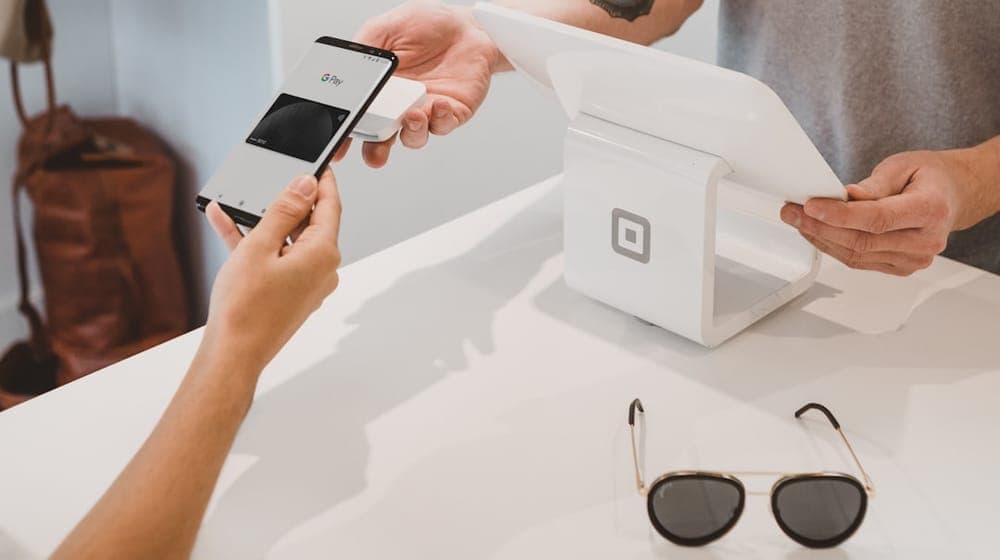 Photo by Clay Banks on Unsplash
What is NFC on my phone?
Having NFC means your phone carries a chip and an antenna that work in three ways:
- Reading: the phone reads a tag or card and opens what it holds — usually a link. This is what happens when you tap a sticker on a restaurant table.
- Card emulation: the phone behaves like a card, paying at a terminal through Apple Pay, Google Wallet or Mada, or opening a door with an access card stored on it.
- Device to device: a quick exchange between two phones or gadgets held together, used for example to start pairing Bluetooth headphones with a tap.
How do I know if my phone has NFC, and how do I turn it on?
iPhone: every iPhone from the iPhone 7 onwards has NFC, and there is no switch to turn it on or off. From the iPhone XS onwards, tags are read in the background whenever the screen is on and unlocked; a notification appears and a tap opens the link. The iPhone 7 to X read tags through the NFC Tag Reader in Control Center.
Android: open Settings and search for "NFC". It usually sits under "Connections" or "Connected devices"; on Samsung it is called "NFC and contactless payments". If the option does not exist at all, your phone most likely does not support it.
Where to tap: antenna placement varies, and it causes more confusion than anything else. On an iPhone it sits near the top edge of the back; on many Android phones it is around the middle. Someone tapping with the wrong part of the phone decides the tag is broken when only their hand was in the wrong place.
Why is the range so short? Because it is a safety feature
The short range is a deliberate design decision. Nobody can read your card from the next table, and nothing happens unless you bring your phone close yourself. Physical proximity works as implicit consent: you chose to hold your phone to this particular device. That is exactly why NFC was chosen for payments.
What is NFC used for?
Most of us use it daily without naming it:
- Payments: paying by phone or tapping a Mada card at a terminal.
- Access: office, hotel and building cards.
- Transport: metro and bus tickets in many cities.
- Digital business cards: a card an employee carries; a client taps it with their phone and the employee's card opens.
- Smart stickers in shops: on the door, the table or the counter, opening the business page with a tap.
- Products: authenticity checks and tracking in some sectors.
What is an NFC card, and what is an NFC tag?
Open an NFC tag and there is nothing complicated inside: an antenna of fine copper loops, a chip about the size of a grain of sand, and an adhesive layer. An NFC card is the same thing inside a plastic card the size of a bank card.
The widely misunderstood point: a tag does not store your name, number and photo. Its capacity is far too small. What it stores is a link — the address of your page. The phone reads the link and opens it, and your page arrives in full from the internet.
That is the tag's greatest advantage. When your number or title changes, you edit the page; the tag is never touched. A card you handed out a year ago still leads to your current details.
Two practical tips: keep the link short, because small chips have little room, and lock a tag after writing it if it sits in a public place, so it becomes read-only and nobody can overwrite it.
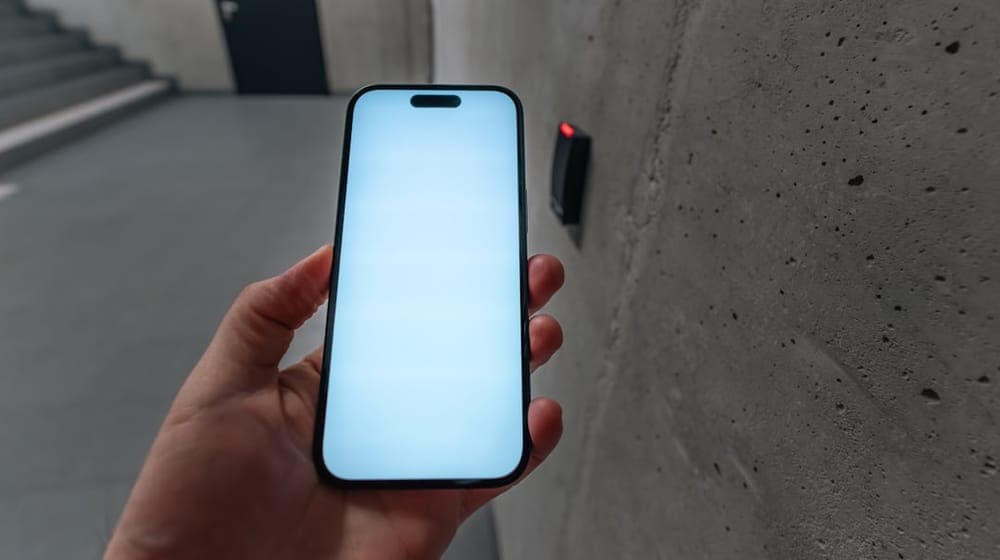 Photo by Jakub Żerdzicki on Unsplash
NFC vs Bluetooth vs QR
| Aspect | NFC | Bluetooth | QR |
|---|---|---|---|
| Range | Centimetres | Metres | Line of sight |
| Pairing | None needed | Required | None needed |
| Battery on the other side | Not required | Required | Not required |
| Speed | Instant | Seconds to pair | Depends on scanning |
| Works from a screen or paper | No | No | Yes |
In short, NFC wins on the single close tap, and QR wins at a distance and for phones without NFC — which is why the two are usually used together. The full comparison is in NFC vs QR.
Is NFC safe?
An NFC tag on a business card or a shop door carries a public link — the same link you would send over WhatsApp without a second thought. It reads nothing from your phone, sends none of your data anywhere, and cannot run anything without you: the phone shows the link and waits for your tap.
Payment is a different matter. It uses encryption and a token that changes with every transaction, and phone wallets normally ask for your face, fingerprint or passcode before paying. The full treatment is in NFC security: what can actually be read.
The limits
NFC does not work through thick metal, so a tag stuck straight onto a metal surface weakens unless it is a type designed for it. It does not work at a distance, so it is no use on high signage or a shop window seen from across the street. And some budget phones do not support it. These are less flaws than a definition of the right use: NFC is a tool for deliberate, close contact.
How can NFC help your business?
What matters about NFC to a business owner is that it removes steps from the customer's path. A customer sitting in your café does not type a name or search; they hold their phone to a sticker on the table and your page opens with the menu, the hours and the location. Every step removed from that path means more people finish it.
With AurCard, an employee gets an NFC card that opens their digital business card in the company identity, and a shop gets a smart sticker that opens the business page. The sticker is ordered from the dashboard after you subscribe, at 74.75 SAR including VAT, once, and ships printed in your brand. Because the chip holds only the link, every change you make to your page shows at once with no new sticker, and a QR code beside it serves phones without NFC. Plans are on the pricing page, and choosing where the sticker goes is covered in smart stickers for shops.
Frequently asked questions about NFC
What does NFC stand for?
Near Field Communication: a technology that moves data between two devices held within a few centimetres of each other.
Does NFC drain my phone's battery?
Its consumption is tiny and unnoticeable in daily use, because the phone only transmits real power at the moment of a read. On Android you can switch it off in Settings if you never use it.
Do I need an app to read an NFC tag?
No. Reading is built into the phone's operating system, and what the tag holds is a link the browser opens directly. More in do customers need an app for NFC?.
Why won't my phone read an NFC tag?
The usual causes: tapping with the wrong part of the phone, a locked screen on an iPhone, NFC switched off on Android, a metal phone case, or a tag stuck straight onto metal.
Can someone take money from my phone through NFC?
The range is a few centimetres, and phone wallets normally ask you to confirm every payment. Shop stickers and business-card tags carry a public link and cannot read anything from your phone.
Read next
Digital Business Cards for Companies in Saudi Arabia: The Complete 2026 Guide
A company digital business card is not a paper card on a screen: it belongs to the business, carries its identity, saves to the customer’s phone in one press, and stays with the company when the employee leaves. What to know before you choose.
The smart sticker: where to put it, and why the storefront and the till give different numbers
Three places, three different intentions in the customer’s head — and how to read each sticker’s numbers to know which deserves a second one.
NFC Sticker Maintenance and Lifespan
An NFC tag has no battery and no moving parts, but installation and environment decide its life. Here is what damages one and how to check yours.